Being a CEO is often described as a dream role - big decisions, big impact, big picture thinking. That’s part of it. But the reality is less romantic.
The CEO sits above all functions and absorbs everything that doesn’t fit cleanly anywhere else - strategy, people, capital, operations, positioning. At its simplest, the job is about maintaining stability while pushing growth forward. What’s working, what’s broken, and what is about to break all compete for attention at the same time. Most CEOs don’t spend their days “thinking strategically.” They spend them context-switching, reading, preparing, following up, approving, scheduling, and reexplaining the same decisions across different rooms.
That hasn’t fundamentally changed in recent years, except for the load. With geopolitical turmoil, currency fluctuations, constant uncertainty, and faster cycles, flexibility and adaptability have become a CEO's survival requirement. But what is currently changing more quietly is how some CEOs manage their time.
More and more executives are regaining control over their schedules and attention by letting AI absorb administrative and coordination work. Meeting summaries, preparation, planning, follow-ups, and routine analysis are no longer manual drains on executive focus. The amount of saved time is significant, often measured in dozens of hours per month. And it is not only about hours saved. It’s about mental bandwidth. When background work fades into the infrastructure, CEOs can spend more time on judgment, direction, and trade-offs - the parts of the role that can’t be delegated or automated.
This article isn’t about AI tools. It’s about the classes of executive work that AI can now reliably take off a CEO’s plate and where human leadership remains essential.
Where CEOs Are Actually Saving Time With AI Executive Assistants
CEOs don’t lack ideas, but what they truly lack is uninterrupted time. The working day of a modern CEO is usually fragmented by calendars, inboxes, meetings, and constant micro-decisions. What AI changes is not leadership itself, but the amount of administrative coordination required to exercise it. AI executive assistants absorb that coordination layer and return focus to the CEO.
Let's break down exactly where CEOs are saving the most time with AI executive assistants.
Calendar Organization and Scheduling
For a CEO whose calendar is overloaded with meetings and urgent issues, calendar management remains the largest source of reclaimed time. Coordinating meetings across time zones, departments, and external partners used to require endless back-and-forth. AI now handles this automatically. It aligns availability, resolves conflicts, and reschedules when priorities shift.
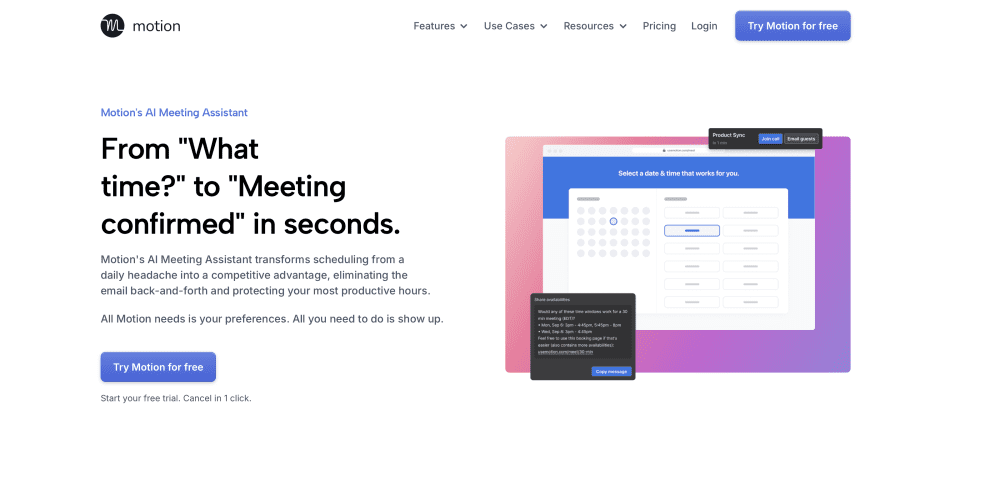
For instance, Clara is a unique AI assistant for meeting scheduling. It behaves like an assistant. You loop it into an email thread, and the scheduling problem disappears. The back-and-forth, the coordination with multiple participants, the alignment of availability - all of that happens without the CEO being involved. The calendar updates itself. Time is reclaimed without another tool to manage. Motion approaches the problem from a broader angle. It treats the calendar as a dynamic system rather than a static plan. Tasks, meetings, and priorities are continuously rebalanced by AI to protect focus time and execution flow. Instead of manually deciding what fits where, the CEO lets the system optimize the day in real time.
Email and Routine Communication Handling
The average CEO reviews over a hundred emails a day. Most of them are not strategically important, but still require attention or a response. AI assistants categorize messages, highlight truly important ones, draft responses, and handle routine correspondence independently. AI can match your voice and style, requiring only final review and approval. Important topics are highlighted, while unnecessary information is filtered out. The inbox ceases to be a to-do list and becomes an information stream the CEO can interact with selectively. It alone saves several hours a week.
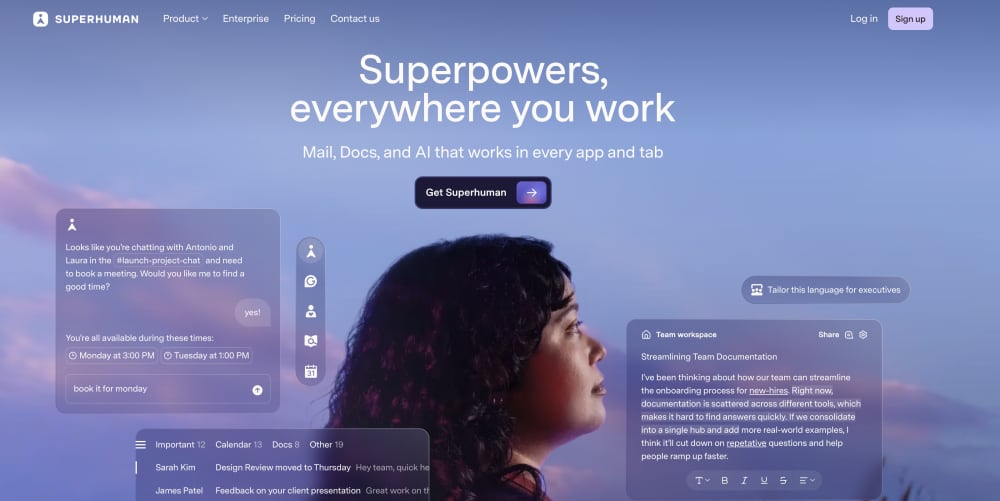
Superhuman AI triages incoming messages, surfaces critical items, and drafts responses that match the executive’s style. It turns the inbox into a selective information stream rather than a task backlog. Gmail Smart Reply suggests context-aware responses, allowing users to reduce the time spent on routine correspondence to just a few seconds while maintaining the desired tone and style of communication.
Meeting Preparation, Analysis & Follow-up
Preparation no longer means starting from scratch. AI can assemble background context, outline key discussion points, and prepare arguments for internal and external meetings. It replaces manual note-taking and post-meeting alignment. During the meeting, it doesn’t just transcribe the text – it notes where and how the task was mentioned, what agreement was reached, and what deadlines were set. Then, it structures follow-ups and tracks execution. More importantly, this approach creates continuity. Decisions don’t get lost. Agreements don’t rely on memory. The CEO leaves meetings with clarity, not homework. AI can also analyze meeting dynamics - identifying where discussions stalled, who dominated the conversation, and where alignment broke down. It turns meetings into a source of insight, not just an obligation.
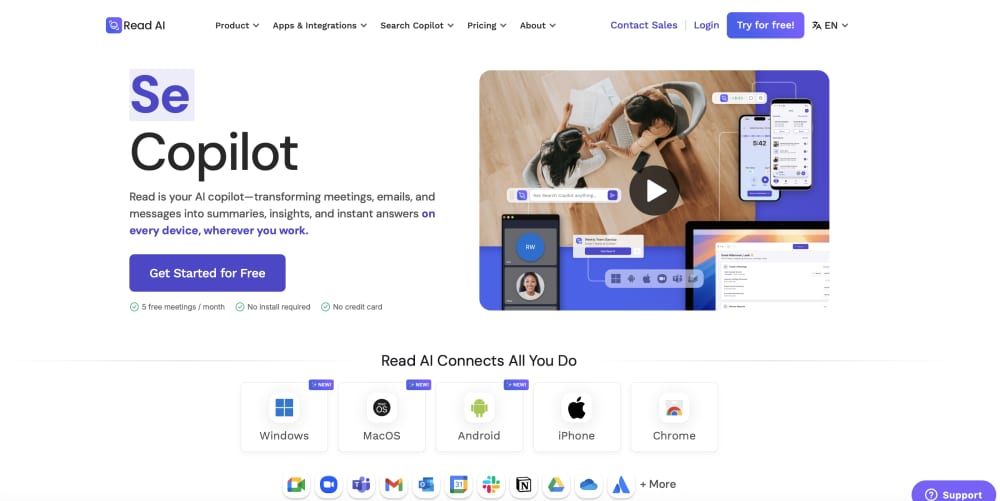
Tools like Otter.ai automate transcription, highlight agreements and deadlines, and analyze participation patterns. It joins calls, records what was said, and produces searchable transcripts and summaries for future reference. Read AI goes further by linking meeting context to work happening across other systems, such as email, messaging, and CRM platforms. It builds a unified understanding of commitments and discussions by connecting follow‑ups across channels. That means the insights don’t just live in a transcript, they tie back to the broader workflow and execution context.
Compressed Information Gathering, Research, and Data Analysis
Research-heavy tasks used to consume hours of executive time. Preparing surveys, running interviews, and summarizing results - all of it was slow and fragmented. AI compresses this process. Preparation time drops from hours to minutes. Interview data is analyzed automatically. A CEO can surface patterns, risks, and insights without manual synthesis. In addition, it can analyze feedback from staff and clients, identifying underlying sentiments and potential risks. At the strategic level, AI tools help collect and analyze large volumes of data, including market trends, competitor behavior, and macroeconomic indicators. It makes growth planning easier: the CEO can foresee how changes in prices, tax policy, or the labor market will affect the business.
CEOs don’t use research tools as analysts do. They don’t want long dashboards and endless raw data, they want concise summaries, clear insights, patterns, and risks highlighted, implications for decisions. Tools like Perplexity, ChatGPT, Claude, or other LLMs can easily turn large amounts of unstructured information from multiple sources into concise, referenced summaries.
Report and Outreach Generation
Preparing materials for the board of directors, investors, and shareholders is one of the most time-consuming tasks for a CEO. AI can automatically collect data from multiple systems and consolidate it into a single, coherent view by creating charts or generating presentations. The CEO no longer receives scattered reports - only information ready for decision-making. Additionally, the CEO often becomes the face of the company: addressing employees, giving public speeches, and writing letters to clients. AI services help quickly prepare texts with the desired tone – formal, motivational, or customer-oriented.
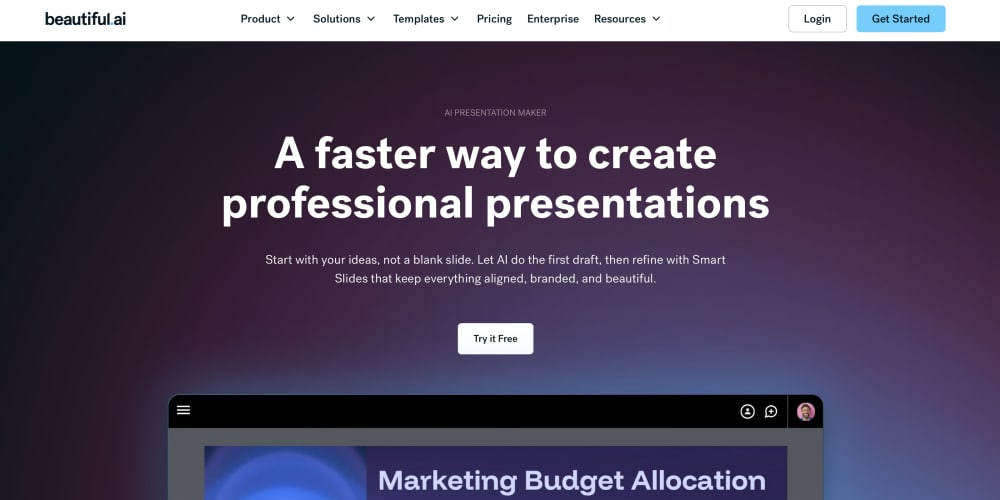
Beautiful.ai is an AI‑assisted presentation builder that turns key points and data into professional slides. It automatically handles layout, consistency, and visual hierarchy so leaders don’t spend hours polishing decks. Tools like Wordtune can help refine messaging, adapt tone for different audiences, and ensure clarity and impact in external communications.
Reflection and Leadership Feedback
Honest feedback is hard to obtain. Subordinates rarely tell their manager the truth about their management style. Hiring external consultants is costly. One of the least visible, but one of the most valuable uses of AI is self-reflection. AI has become that fearless advisor who can point out mistakes. It analyzes how the meeting went and what the team dynamics are like. It's very useful to ask AI to evaluate your actions and ask questions – "If I'm wrong, please explain why." It is a great way to look at your ideas from a different perspective and develop creativity. It provides recommendations for changing approaches to employee management. Moreover, criticism from AI is easier to accept because it has no personal motives and does not question the author's authority.
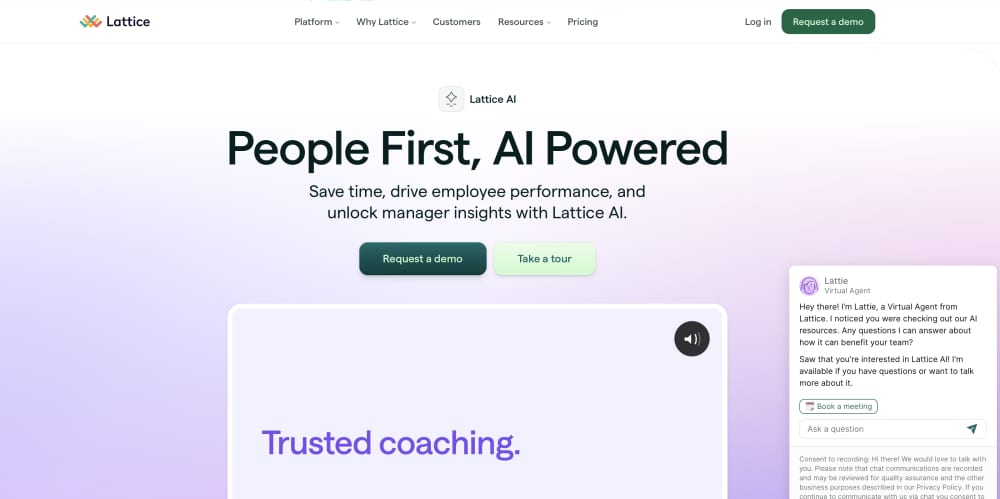
Self-reflection is obviously possible in a simple dialog with any LLM like ChatGPT, Claude. Additionally, tools like Lattice can help gather feedback from employees, synthesize trends, and highlight areas for leadership improvement while preserving anonymity. Humanyze is another tool that analyzes communication patterns, collaboration networks, and meeting behaviors to reveal team dynamics and areas where leadership impact could improve.
Risk monitoring and early signals
And finally, modern AI tools continuously monitor regulatory changes, industry shifts, and emerging technologies. A CEO receives not only notifications about what has happened, but also a forecast of how it might affect the business. It allows them to make decisions one step ahead of competitors and minimize unexpected threats.
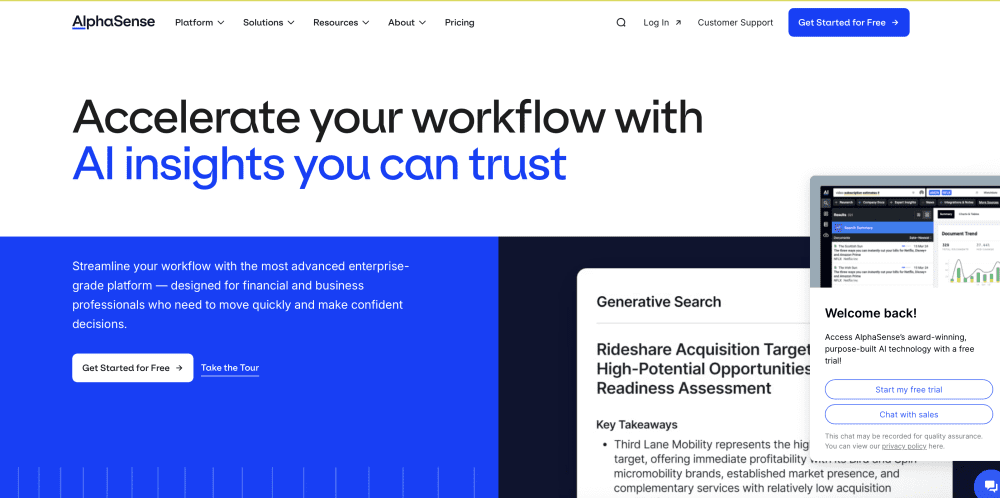
AlphaSense aggregates signals from earnings calls, filings, news, and analyst research, and uses AI to surface relevant trends and anomalies. The CEO can see shifts in competitive dynamics or market sentiment without manual scanning. FiscalNote tracks regulatory updates and policy changes, providing summaries and impact analysis so CEOs can anticipate compliance and market risks.
When is AI Useless for a CEO?
Some things won't change, no matter how much technology emerges. They stay human. Relationships are one of them. Building trust with investors, clients, and teams is always about presence, people, and the relationship between them. AI can help organize thoughts, outline arguments, or pressure-test logic. But it can’t replace personal connection. When communication starts to feel generic or templated, people notice, and it ruins trust.
Take shareholder communication. AI can help structure a message or clarify a narrative. But it can’t sense what will genuinely resonate with a specific audience in a specific moment. Leaders who outsource that judgment risk sounding detached, or worse, insincere.
The same applies to difficult conversations. AI can help prepare the list of questions for discussion, outline risks, and map positions, but the dialogue itself must be led by a person. The ability to communicate, find common ground with people, and resolve conflicts is what makes a CEO a true leader. Conflict resolution, negotiation, and alignment require empathy, timing, and the ability to read a room. It is something that cannot be delegated to AI.
Inspiration is another hard boundary. Teams don’t follow plans - they follow people. Energy, belief, and momentum emerge from human interaction. AI can optimize workflows and schedules perfectly, but only a human can ignite the fire in the eyes of the team.
And finally, accountability doesn’t move. A CEO can consult AI, explore scenarios, and evaluate options faster than ever. But the decision, and the responsibility for its outcome, remains human. That’s not a limitation of technology. That’s the definition of leadership.
Final Thought
AI has ceased to be a "futuristic trend" and has become a working tool for CEOs. It helps them prepare reports faster, make data-driven decisions, coordinate their team, and stay focused on strategic tasks. But while AI can accelerate processes and analyze data, it’s not all that's needed for success in business and team management. Inspiring, motivating, showing empathy, making decisions, or taking responsibility for them - these are still the tasks of a leader. The main value of AI for CEOs is not in replacing the leader, but in freeing up their time for truly important decisions. Critical thinking is becoming paramount for CEOs. They must be able to analyze the conclusions suggested by AI, verify their accuracy, and make final decisions based on their own experience.